Sunday, April 30, 2023

Broken Van

What happened to this van? 
 

Something tore a gash in the passenger side door, dug a crease into the side doors, broke the antenna, knocked off the bumper and bent all the panels.

As I sketch in ballpoint pen, pencil, gray marker, and calligraphy pen, I ask myself: Why am I attracted to things that are broken, damaged, abandoned, and decayed?

I suppose it's because all broken things tell a story.

In this case, the van was too damaged to fix, so they left it behind the gas station. The van once belonged to the "Villa Florist," according to the name painted in Copperplate letters on the side. Was it driving out to deliver a bouquet when the accident happened? What did it run into, or what ran into it? Whatever collided with seems to have been lifted up during the impact because the gash starts low and goes high in the middle. Whose fault was it? Did the driver lose his or her job?

Saturday, April 29, 2023

How Fluorescent Colors Work

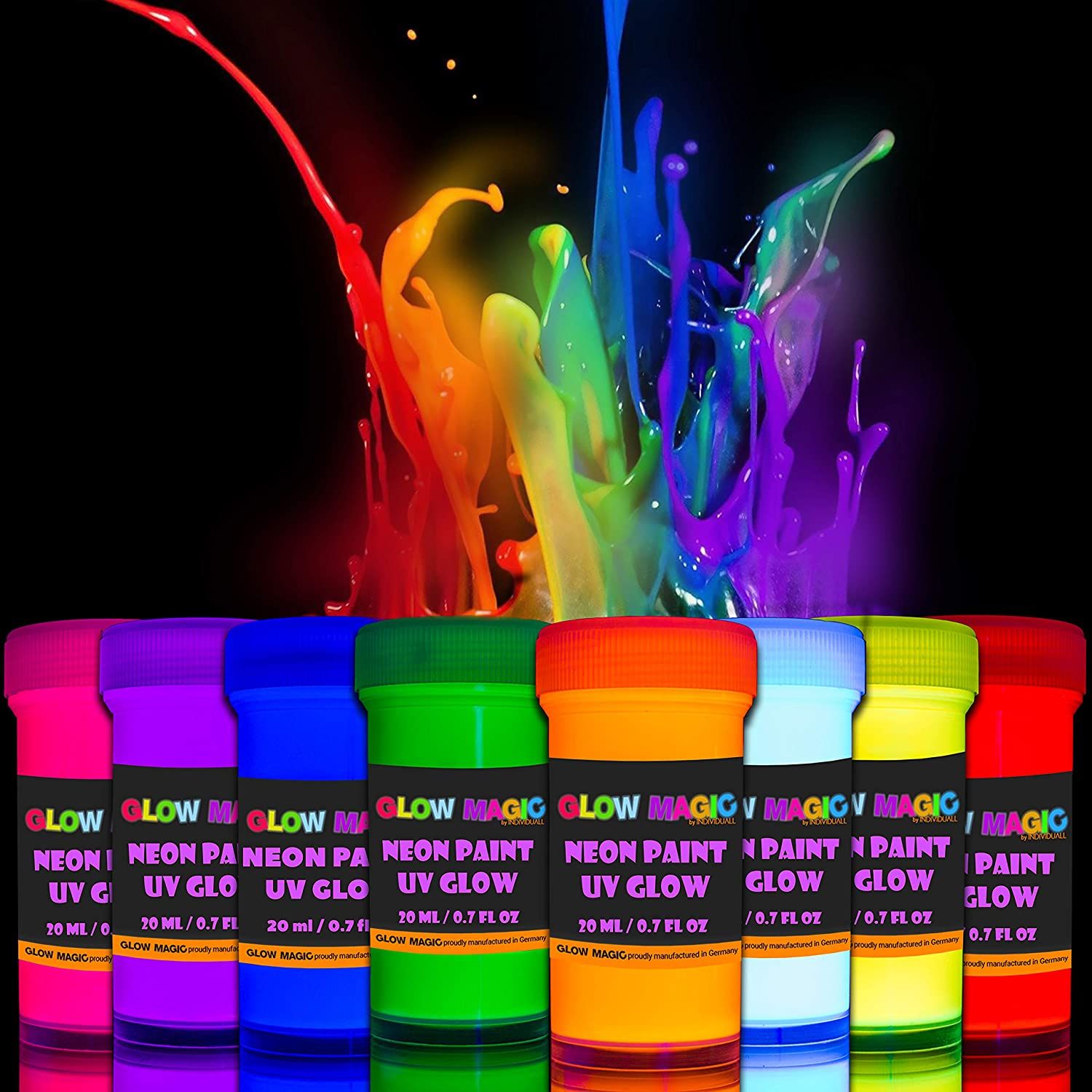
Conventional color pigments absorb visible light energy and convert it into visible wavelengths of light. So a white light can bounce back to you after interacting with a red sweater, and you'll see the light coming into your eye as red. 


Fluorescent—or "neon"—colors do that, too, but they have an additional trick. Fluorescent colors also absorb and convert ultraviolet rays, which are invisible, and convert them into visible light. Fluorescence shifts energy in the incident illumination from shorter wavelengths to longer (such as blue to yellow) and thus can make the fluorescent color appear brighter (more saturated or lighter in luminance) than it could possibly be by reflection alone. The absorbed energy excites electrons in the pigment molecules to a higher energy level, which then relax back to their ground state by emitting light at a longer wavelength than that absorbed, resulting in a visible glow

As a result, your eye perceives a far more saturated color or a tone that's higher in tone relative to the white paper they're drawn or painted on.

Ultraviolet light is usually present in outdoor light, whether direct sunlight or overcast. Without a source of short-wavelength light (like a black light), the fluorescent pigments won't stand out. As soon as you add an ultraviolet light source, the fluorescent pigments will appear to glow, while conventional colors remain dull and hardly visible. If a subject is lit only by ultraviolet light and no visible wavelengths, fluorescent colors will appear to glow magically in the dark. 
--

Friday, April 28, 2023

Solarization

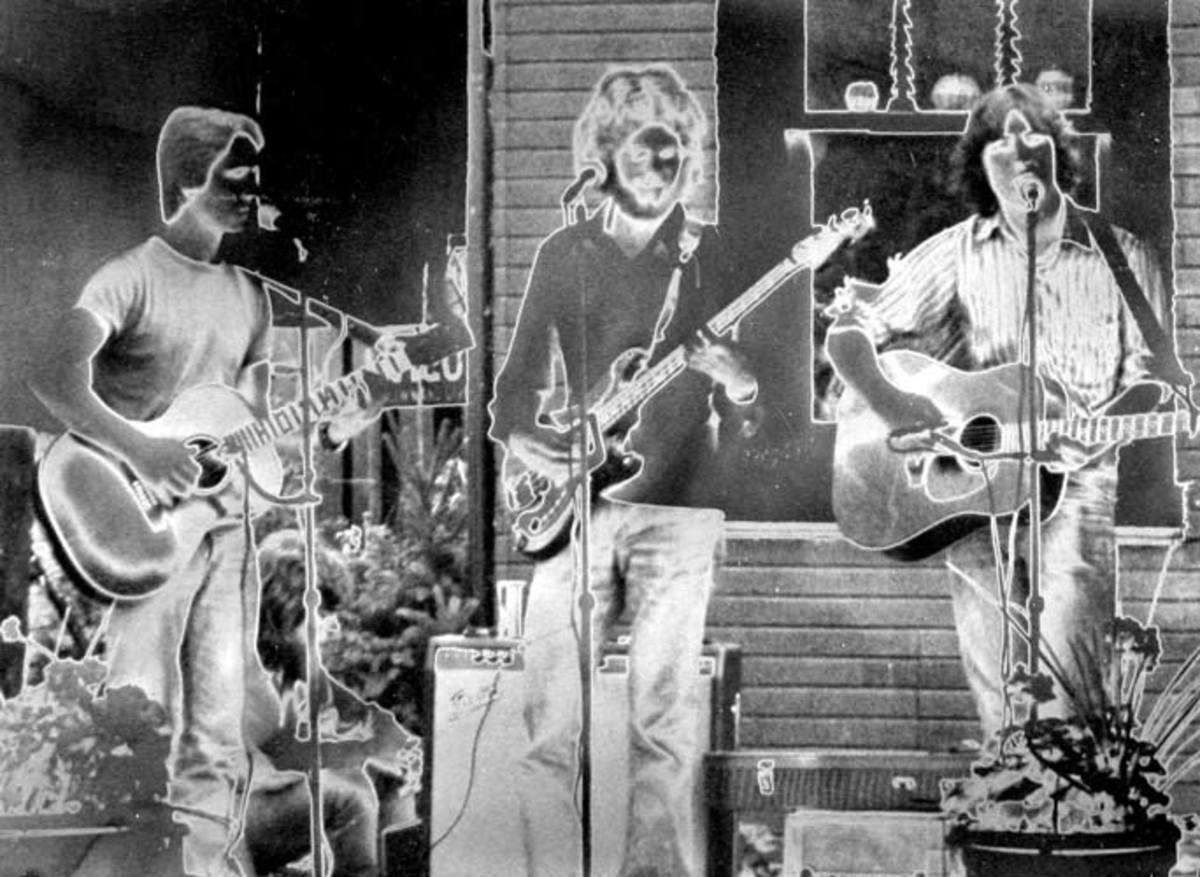
Solarization, also known as the Sabatier effect, is a photographic technique that involves partially reversing the image tones of a photographic print or film during the developing process, resulting in a dramatic and surreal effect. 

The process involves exposing the photographic material to light during the development phase, which causes the highlights to become darker and the shadows to become lighter. This creates a line of inversion along the edge of areas of contrast, creating a glowing outline or halo effect. The result is a stylized image that appears to be partially negative and partially positive. 

Sabatier Effect courtesy Felt Magnet

The name "solarization" comes from the technique's original use of sunlight exposure during the reversal stage of development. The technique has been used by various artists and photographers over the years, including Man Ray, Lee Miller, and Jerry Uelsmann. 

Today, solarization can be achieved both in the darkroom and digitally through image manipulation software. In the darkroom, solarization can be achieved by exposing the photographic paper to light during the development phase, while in digital image manipulation, the effect can be created through software filters that can invert the tones of the photograph.

Solarization on Wikipedia
More on photo styles from Twitter user Anonymouse

Wednesday, April 26, 2023

Leroy Nieman's Femlin

Leroy Nieman (1921-2012) was an American artist who loved glamor and celebrity. He portrayed the worlds of sports and jazz using bright colors and splashy paint strokes and distributed them as serigraphs. 


He also created a popular black-and-white female character for Playboy Magazine called Femlin. 

According to the Franklin Bowles Gallery, "Neiman envisioned her as being 12" tall, so in most of the illustrations she's in that scale. She's depicted as being mischievous, and as her name suggests, she's a female gremlin. Starting in 1957, every issue of Playboy had two black and white Femlins; she was usually on the jokes page behind the centerfold."
---
Decoder Ring podcast about Leroy Nieman's career, The Artist Who Was Both Loved and Disdained
 

Tuesday, April 25, 2023

Asperitas Clouds

From below, asperitas clouds appear like upside-down ocean waves, undulating and cresting and best seen at sunset when they're lit from below. 

The term "asperitas" and the classification is a rare new addition for the official cloud atlas. Here's the official definition of Asperitas clouds:

"Well-defined, wave-like structures in the underside of the cloud; more chaotic and with less horizontal organization than the variety undulates. Asperitas is characterized by localized waves in the cloud base, either smooth or dappled with smaller features, sometimes descending into sharp points, as if viewing a roughened sea surface from below. Varying levels of illumination and thickness of the cloud can lead to dramatic visual effects. Occurs mostly with Stratocumulus and Altocumulus."

Monday, April 24, 2023

Art Books on YouTube

Recently, Luiz Celestino produced a video explaining a way to teach yourself about color using Color and Light: a Guide for the Realist Painter as a textbook:

Thanks, Luiz! And thanks to YouTuber Vonnart for recommending my book Color and Light in his roundup of favorite art books.


As he goes through 30 of his favorite art books, he shares helpful tips on how to manage detail vs. empty areas and how to design flowing fabric. 

My Top Favorite Art Books and Reference Books as an Artist!

Sunday, April 23, 2023

Gibson Girl at Her Painting

"She goes into colors," says the caption of this pen-and-ink drawing by Charles Dana Gibson (1867-1944).

What a challenge for this young woman, dealing with all these suitors and critics, while remaining attractive, poised, and confident. 

Oh, and also she wants to produce a good painting without ruining her white dress.

That spirit of the capable, independent woman is one of the things that made Gibson's images so popular.

Saturday, April 22, 2023

Émile Bayard


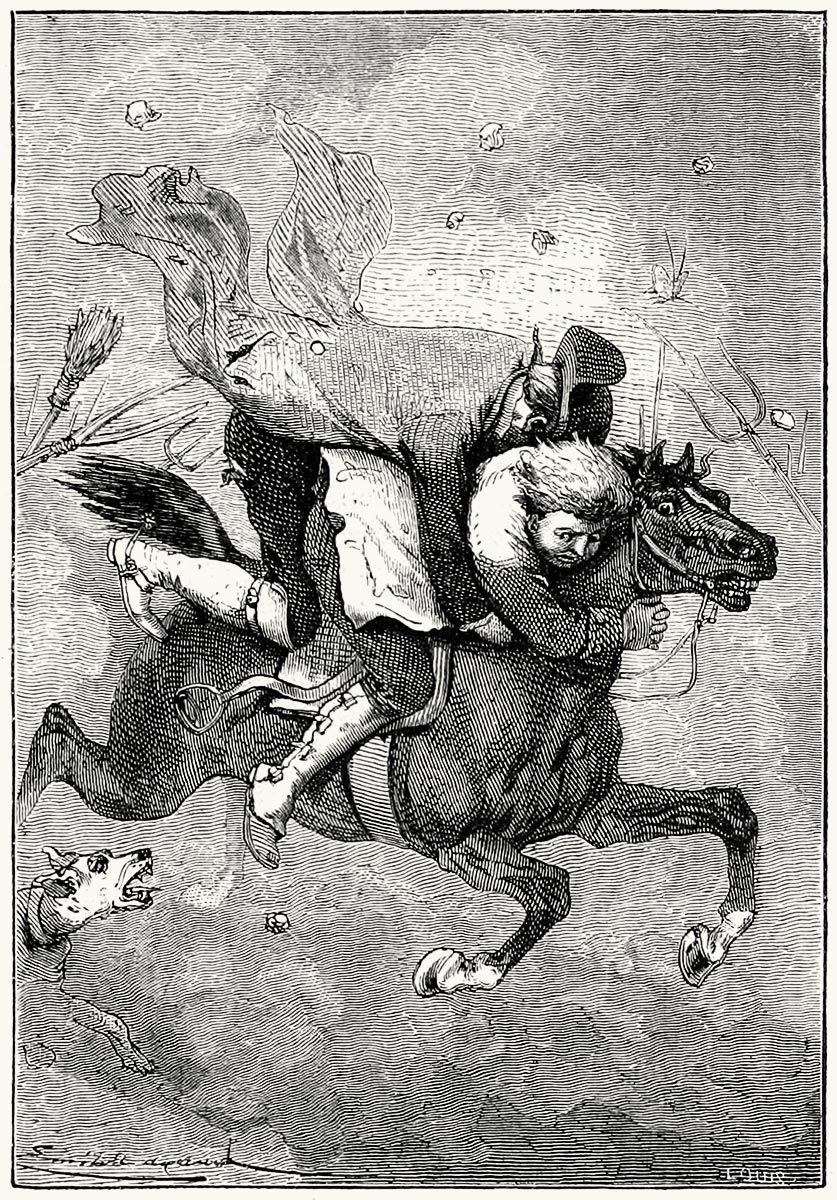
Émile Bayard (1837-1891) was a prolific French artist who created illustrations for novels, magazines, and newspapers.


He is best known for his depiction of Cosette from Victor Hugo's Les Misérables, which was used in marketing the Broadway musical.

He illustrated Jules Verne's novel "Journey to the Center of the Earth." Verne was so impressed with Bayard's preliminary sketches for the book that he rewrote certain sections of the story to better match the illustrations. He also illustrated Verne's "From the Earth to the Moon," an early work of science fiction.


Bayard was a tireless researcher, digging through libraries and costume collections to get the right detail. He  once insisted on building a scale model of an ancient city in order to accurately depict it in a book illustration.


Nevertheless he was a fast worker. According to a frequently cited anecdote, he once completed a series of illustrations for a book in just 48 hours, working non-stop without sleeping.

Friday, April 21, 2023

Children's Book Art in Massachusetts

Garth Williams (1912-1996) Cover Study, Crayon and ink on paper, From: I Like Everything

The Berkshire Museum in Pittsfield is hosting an exhibition of children's book illustration that includes over 140 original works, including art by Beatrix Potter, Garth Williams, Maurice Sendak, and Dr. Seuss.

The show has a number of gouache originals created for the Little Golden Books series. 

Feodor Rojankovsky (1891-1970), The Nursemaid, 1949,
Gouache on board From: Big Elephant by Kathryn Jackson

When he was interviewed about how he got started, Feodor Rojanskovky recalled a moment in his childhood when, "I was taken to the zoo and saw the most marvelous creatures on earth...and while my admiration was running high, I was given a set of crayons."


There are many other illustrators represented, including Rosemary Wells, Richard Scarry, Chris Van Allsburg, Hilary Knight, David Shannon, and Dennis Nolan. Some of the characters of literature represented include Babar, Eloise, Madeline, the Cat in the Hat and Dick & Jane. 

The exhibition "Childhood Classics" will be on view through April 30, 2023 at the Berkshire Museum, which is located in Pittsfield, Massachusetts.

Wednesday, April 19, 2023

Interacting with my Privately-Trained Chatbot

A few days ago, I asked you to pose some questions to the Virtual James Gurney, a chatbot that we trained on all my blog posts, videos, books, and interviews.


Ruben (@rgramosart on Twitter) asked the question about getting digital art to look painterly. Hmmm, Real James Gurney here. I think the virtual me knows more about digital painting techniques than I do. Maybe that's because he lives inside a computer.


Matt A.A. Smith ( @smithmattsmith on Instagram) asked a fun question about painting dinosaurs from life. I'm fascinated how large language models navigate truth, satire, fiction, and comedy. We humans play all sorts of pretend games with each other, and I love the way the chatbot seemed to address the fact that we're just having fun here. A wittier chatbot would have observed that birds are really dinosaurs, and that I've sketched chickens, turkeys, and emus from life. 


Moézyo de Lima ( @moezyo on IG) asked his questions in Portuguese, and it gave the answer in the same language. This is a capability of the model I wasn't expecting.


@myphonetookthis asked the kind of questions that could be answered in many individual ways by different artists. The privately trained chatbot answers just in the way I would, with words quoted or closely adapted from my published writing.


@clarewashere asked a question that was a little tongue-in-cheek, and the chatbot gave her a sincere answer, if a little simplistic.


If you want to play with the chatbot in a different way, you can ask it to take on an attitude or a character, such as a pretentious blowhard or a film noir gangster, and it will oblige.

Be sure to bookmark the URL, which is currently listed on the Linktree if you click on my name.

For the five folks that I chose as winners, please email me your mailing address (it's on the left edge of my blog), and I'll send you a signed poster.