Monday, July 4, 2011

Final Day at the Color Workshop

We wrapped the workshop in Newburgh, New York yesterday. Three days seemed like the perfect amount of time to really dive into the subject of painting in colored light.


In the painting room, 17 artists and their easels gathered around the model stand. Garin Baker, who is sitting to my right in this picture, was the host of the home/studio venue, along with his significant other Clara, who prepared delicious meals and refreshments for all the attendees.


Here are two demos I did to explore the difference between white light and colored light illumination on the same model. The painting on the left is in watercolor 6x8 inches, and the one on the right was in oil, 9x12. Both were about two hours.

Students worked while I did demos, and I spent most of my time going around and trying to help people solve color mixing problems.


After an afternoon session of a semi-nude female model under strongly colored light, we finished the workshop painting the sunset light on the comparatively gray landscape of Storm King mountain on the Hudson River.  We all were seeing new colors in the landscape, thanks to the studio practice.

Some students were experienced painters, but others were painting outdoors for the very first time, and they even endured a passing shower before the light broke magnificently.


Here was my 11x14 oil of the view. The workshop was a great learning experience for all involved, me included. Thanks to Garin and each of the students for your incredible efforts to make this a success.

Students: if you like, please post in the comment section any links to the images you did in the class.

And to others interested in future workshops: Garin is interested in expanding the vision of his atelier as a mecca for small, focused art workshop experiences. Let me ask: what sorts of workshop topics would you like to experience? Please let Garin know in the comments or vote in the poll at left.

 More photos at Garin's blog
Carriage Art Atelier
Color and Light: A Guide for the Realist Painter
Report on the class at Outdoor Painter.com

Sunday, July 3, 2011

What is Oiling Out?

Blog reader Mark asked a good question: “I've asked a few of my oil painting friends about what the term 'oiling out' means and they don't know what it is. Do you know what artists are referring to? I get the idea that they're rubbing oil onto the painting for some reason.”


Yes, Mark, you got it. “Oiling out” means rubbing a little linseed oil or clear painting medium over a dry surface of paint that you worked on earlier. You can apply the oil with a clean, lint-free rag, cheesecloth, or scrub it on with a large bristle brush and remove most of it with a rag. Edit: Some people recommend using odorless mineral spirits and Galkyd (an alkyd painting medium) for the oiling out medium.


Here's a video from Gamblin showing the process. (link to video)

That oil layer resaturates the colors and makes the paint surface more receptive to the new layer of wet paint, so that it will look like it was all done at the same time. Without oiling out, the new paint application goes on too dry and scrubby. You don't need much oil to get the job done--just a hint of oil.

An oil painting manual from 1845 by J.S. Templeton defined oiling out like this: “The surface of colours in drying, frequently assumes a state that renders it difficult to lay fresh colours thereon properly. To correct this, previous to commencing work, the picture must have a little oil, (either Linseed or Nut) sparingly applied to it with a brush and then perfectly removed by wiping it with a soft silk rag, this will be effectual.”

My wife tells me it’s like putting on makeup. Hydrating the skin with a little moisturizer makes it more receptive to make-up. Not that she paints her face very often!

LINKOLOGY:
Templeton quote
More information from Virgil Elliott
Video from Gamblin about Oiling Out
Traditional Oil Painting: Advanced Techniques and Concepts from the Renaissance to the Present
 Gamblin Refined Linseed Oil
Color and Light: A Guide for the Realist Painter

Saturday, July 2, 2011

Day 1: Colored Light Workshop

We had a busy Day 1 on our three-day "Painting in Colored Light" workshop at Garin Baker's Carriage House Art Studios in Newburgh, New York.

 
The 17 participants arrived from as far away as Germany. There are six people from Canada, some of whom are professional storyboard artists who want to develop their painting and color skills. Steve, a frequent commentator on this blog, came all the way from Michigan, and Bill drove over in a semi tractor trailer from Fargo, North Dakota.

I started by covering some of the key topics in a slide show.


 And then I did an oil demo, painting a white plaster head lit by colored light sources. Here are two studies of Abe that I had done the day before.


The weather was perfect. Garin and Clara provided a lunch of salad and sandwiches, which we ate on the lawn outside the old stone house, accompanied by lots of art talk.

 
Then everyone spent the whole afternoon painting from the casts: observing the colors, mixing pools of the main colors with a palette knife, painting, and refining. In the evening we had a model in for another informal painting session.

All the effects of colored light are easiest to see on the white plaster form. Today we'll be applying that experience to working from the nude and costumed model.

Garin's Art Blog
More about the Workshop
Color and Light: A Guide for the Realist Painter

Friday, July 1, 2011

Ophelia by Millais

Your votes are tallied for the favorite painting of Ophelia, and the winner is the version by John Everett Millais. Out of 682 votes cast, it garnered 284, more than three times as many votes as the next contender, by Jules Joseph Lefebvre.


The painting by Millais is in oil, 44 x 30 inches, and it was painted in 1851-1852. The original is at the Tate Gallery in London. Above is a study of the model, 19-year-old Elizabeth Siddal.

The painting portrays Ophelia’s death scene, as described by Queen Gertrude in Shakespeare’s Hamlet, Act IV, Scene VI:

Her clothes spread wide; and, mermaid-like, awhile they bore her up:
Which time she chanted snatches of old tunes; as one incapable of her own distress,
Or like a creature native and indued
Unto that element: but long it could not be till that her garments, heavy with their drink,
Pull'd the poor wretch from her melodious lay to muddy death


Wikipedia describes the process of making the painting:
“Millais produced Ophelia in two separate stages: he first painted the landscape, and secondly the figure of Ophelia. Having found a suitable setting for the picture, Millais remained on the banks of the Hogsmill River in Ewell—within a literal stone's throw of where fellow Pre-Raphaelite William Holman Hunt painted The Light of the World—for up to 11 hours a day, six days a week, over a five-month period in 1851.
“This allowed him to accurately depict the natural scene before him. Millais encountered various difficulties during the painting process. He wrote in a letter to a friend, "The flies of Surrey are more muscular, and have a still greater propensity for probing human flesh. I am threatened with a notice to appear before a magistrate for trespassing in a field and destroying the hay... and am also in danger of being blown by the wind into the water. Certainly the painting of a picture under such circumstances would be greater punishment to a murderer than hanging." By November 1851, the weather had turned windy and snowy. Millais oversaw the building of a hut "made of four hurdles, like a sentry-box, covered outside with straw". According to Millais, sitting inside the hut made him feel like Robinson Crusoe. William Holman Hunt was so impressed by the hut that he had an identical one built for himself. 

“Ophelia was modeled by artist and muse Elizabeth Siddal, then 19 years old. Millais had Siddal lie fully clothed in a full bathtub in his studio at 7 Gower Street in London. As it was now winter, he placed oil lamps under the tub to warm the water, but was so intent on his work that he allowed them to go out. As a result, Siddal caught a severe cold, and her father later sent Millais a letter demanding £50 for medical expenses. According to Millais' son, he eventually accepted a lower sum.
 Some have suggested that a detail of verdure on the far shore looks a lot like a death’s head or skull. Millais used other symbols of death in the painting, such as the red poppy, and his friend Holman Hunt used overt skull motifs in his work.

Wikipedia description of the painting by Millais
Original Poll on GurneyJourney
Pre-Raphaelite Painting Techniques
The Pre-Raphaelites: Colour Library (Phaidon Colour Library)

Thursday, June 30, 2011

New X-ray technique reveals traces of color in feathered dinosaurs

Scientists at the Department of Energy’s SLAC National Accelerator Laboratory reported today that they have developed new techniques which show chemical traces of pigments in the feathers of 100-million-year-old birds who lived at the same time as dinosaurs.


The pigment, called eumelanin, is what gives color to hair and eyes in most animals, including humans.

The new technique shows features not apparent in the recent discoveries of melanosomes-- pigment producing structures which implied certain coloration patterns. These new findings are based on X-ray evidence of the pigments themselves, not just the pigment-producing structures.

This is exciting news for dinosaur watchers. So much of our identification of modern birds is based on the way they are colored. It’s as if a few pages of our Field Guide to the Dinosaurs suddenly morphed from x-rays to full-color plates.

X-Rays Reveal Patterns in the Plumage of the First Birds (SLAC press release)
X-Rays Illuminate Fossil Pigment (Nature News)

Color Workshop Tomorrow

Tomorrow we'll be beginning the three-day "Painting in Colored Light" workshop at Garin Baker's Carriage House Art Studios in Newburgh, New York.


The workshop will be held in the gallery room of Garin's renovated carriage house/barn. On his blog, Garin has been describing the vision and effort that went into fixing up the structure, which was in bad repair when he bought it.That's the "before" picture on upper left.

Look forward to meeting all the attendees!

Garin's Art Blog
More about the Workshop
More about Garin's mural work on Stapleton Kearn's blog

Wednesday, June 29, 2011

Share One Planet Results

The judging results of the digital wildlife competition "Save our Planet" have been announced. You can see all the winning entrants at the Share One Planet website.


This piece, called "Loris Planet" is by Antonio Javier Caparo.

Tuesday, June 28, 2011

Which is your favorite Ophelia?

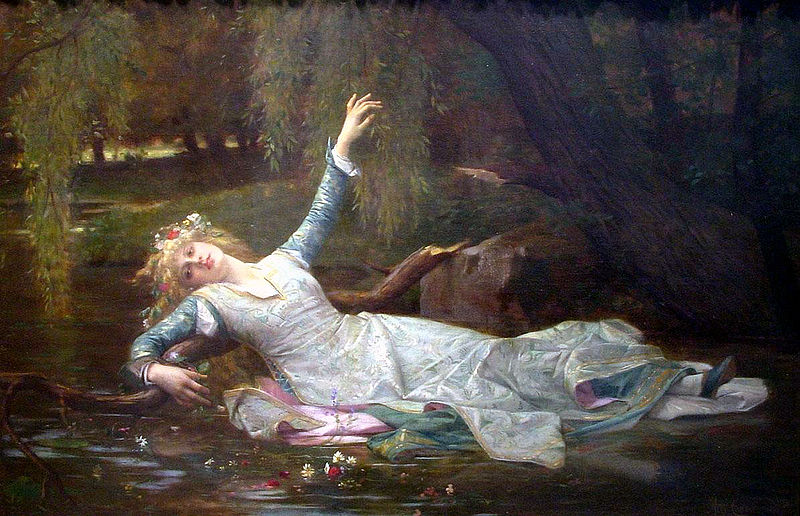
The character of Ophelia was a popular subject with 19th century painters. I’d like to ask you to vote for your favorite image in the poll at left. 

In the poll, 678 people cast a vote, and the number of votes for each painting follows each artist's name.


Above: Jules Joseph Lefebvre. 74 votes
If you’re not familiar with Ophelia, she is the tragic young noblewoman in Shakespeare’s play Hamlet. Her story has it all: beauty, insanity, death—and flowers!


Above: Alexandre Cabanel. 8
Heartbroken by Hamlet’s apparent madness and rejection of her, she gathers wildflowers, climbs a willow, which slants over the river, and falls into the water, where she drowns.


Above: Arthur Hughes  45
She’s generally shown in 19th century paintings with mussed-up hair, a white dress, a garland of flowers, and a wild look in her eyes.


Above: John Everett Millais.   282

John William Waterhouse was fascinated by Ophelia. He did three versions:


Here’s John William Waterhouse (1)  30 votes


John William Waterhouse (2)  56 votes


John William Waterhouse (3)  44 votes


Pascal Dagnan-Bouveret  21 votes


Frank Dicksee  Thomas Francis Dicksee  13 votes


W. G. Simmonds  13 votes


Antoine-Auguste-Ernest-Hébert 35 votes

 
Paul Steck   57 votes

OK! Now that you’ve seen all the images in this post, please cast your vote for your favorite interpretation in the poll at left.

Wikipedia on Ophelia 

Related books:
HAMLET 
J.W. Waterhouse
Against the Modern: Dagnan-Bouveret and the Transformation of the Academic Tradition
Sir John Everett Millais (Pre-Raphaelite Painters Series)
Millais

Monday, June 27, 2011

Light-Field-Capture Camera

Usually when you take a photograph, you have to select the focal distance and commit to it.


Either the foreground is in focus, or the background is sharp. When you click the shutter, you get one focal setting, and you can’t change it later.


A Silicon Valley start-up company called Lytro has developed a new technology called a “light field camera.” According to the company’s website, it has a completely different lens and capture system, allowing you to take a photograph of a scene and then fiddle with the focus afterward.

Try clicking on different parts of the image below and see the focus change.


Unlike a regular camera, which captures only the light quantities that intersect a single focal plane inside the camera, the light field camera captures the intensity, color, and vector direction of all the rays of light. It replaces many of the internal components of a traditional camera with special software.

The video below gives the pitch:


A website promoting the new technology gives a gallery of images where you can rack the focus to any distance.

If you combined these image interfaces in stereoscopic 3D with eyetracking technology to input the focus changes, I believe you'd get a very powerful 3D illusion.

 More on Engadget 
More on Kurzweil News
Thanks, Carl James Holley and Dorian Iten

Sunday, June 26, 2011

Valdemar by Tuxen

Here's a painting called, "King Valdemar the Great and Bishop Absalon topples the god Svantevit at Arkona, the Wendish capital during the conquest and Christianization of Pomerania in 1168."


 It's by Laurits Tuxen (1853–1927), a Danish painter who studied in the Royal Danish Academy and under Bonnat in Paris.


Another version by the same artist, perhaps a sketch. From Inspirational Art Works