Sunday, November 4, 2012

Part 3: Durand’s Letters

(Part 3 of a series)
Durand articulated the principles of his art in a series of influential articles called “Letters on Landscape Painting,” published in The Crayon magazine in 1855.

Taken together, these writings are the most complete expression of the philosophies of the Hudson River School, and provide valuable insights for today’s painter or collector. Art historian James Flexner describes “Letters” as “one of those rare documents that summarizes the spirit of a group and a generation.”

Durand wrote that direct study from nature was the ideal way for the artist to transcend the limitations of tired compositional formulas, providing “the only safeguard against the inroads of heretical conventionalism.”

He defined conventionalism as “the substitution of an easily expressed falsehood for a difficult truth.” He advised students to begin with a thorough familiarity with the pencil before graduating to paint, and even then, to develop a mastery of foreground objects in strong light and shade before attempting atmospheric distances.

The goal in plein-air work, according to Durand, was to render nature as faithfully as possible, and to “scrupulously accept whatever she presents him, until he shall, in a degree, have become intimate with her infinity, and then he may approach her on more familiar terms, even venturing to choose and reject some portions of her unbounded wealth.”

He addressed the limits of artistic license by saying that the artist “may displace a tree, or render it a more perfect one of its kind if retained,” but the placement of elements in the middle ground and the “characteristic outline, undulating or angular, of all the great divisions, may not be changed in the least perceptible degree, most especially the mountain and hill forms. On these God has set his signet.”

Tomorrow: Part 4--Durand's Subjects 
The book The American Landscapes of Asher B. Durand (1796-1886) is one of the few places where you can get the full text of Durand's Letters on Landscape Painting.

Saturday, November 3, 2012

Part 2: Durand’s America

(Part 2 of a series) Several of Durand’s colleagues, including Frederic Church, Sanford Gifford, and Jasper Cropsey, crossed oceans and continents in search of ever more exotic subjects to paint. By contrast, Durand believed that the best motifs could be found in one’s own country. “Go not abroad in search of material,” he wrote, “while the virgin charms of our native land have claims on your deepest affections.”3


John Durand remarked that his father enjoyed the wilderness regions in New York State and New Hampshire “before railways had penetrated to their recesses, where only a few scattered inhabitants could be found.” He recalled that his father spent all his leisure hours “devoted to painting from nature."

"He set his palette before leaving his house in the city and carried it, with a home-made easel and camp-stool, to his favorite sketching-ground...He was ever ready to rough it over corduroy, muddy, or sandy roads, in stage-coach and on buck-boards...whenever the colors or forms of rocks, trees, or mountains answered his search for the beautiful.”4

Best known for his painting Kindred Spirits, which portrays Thomas Cole and poet William Cullen Bryant standing together in a Catskill clove, Durand produced a body of landscapes ranging from mossy forest interiors to quiet streamscapes and pastoral farm scenes. Most scholars credit Durand and Cole equally as the cofounders of the Hudson River School, America’s first unique tradition of painting. 

After Cole’s death in 1848, Durand was acknowledged as the leader of the movement, serving for sixteen years as the president of the National Academy of Design, where he set aside a special room for the exhibition of nature studies. Durand’s work, including many of his so-called “transcripts from nature,” was the focus a major retrospective exhibition at the Brooklyn Museum a few years ago.


Linda Ferber, curator of the exhibit, has described Durand as “one of the earliest American painters to give up conventional compositional models based on European prototypes and to paint directly in response to what he actually saw in nature.”5
---------
3. Asher B. Durand, “Letters on Landscape Painting. Letter II,” Crayon 1, no. (10 January, 1855), 34.
4. John Durand, The Life and Times of A.M. Durand, (New York: Charles Scribner’s Sons, 1894. Reprint. New York: Kennedy Graphics, 1970.)183-84.

Friday, November 2, 2012

Part 1: Durand on Location

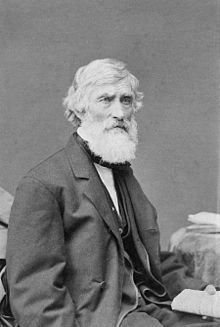
(This is part one of a series on the American landscape pioneer Asher B. Durand (1796-1886)   based on an article I wrote for Plein Air magazine in April, 2005.) 

In June of 1837, Asher B. Durand and his friend Thomas Cole departed on a sketching trip to Schroon Lake in the Adirondacks of New York State. They had carefully planned for the excursion, packing camp stools, umbrellas, and easels, and assembling a list of oil colors that included Antwerp Blue, Mummy Brown, and Asphaltum.

Collapsible tin paint tubes had not yet been invented, so they had to decide whether to grind pigments on location or to transport prepared paint in small pigskin bladders, which were prone to breaking open or drying out.1 They brought along provisions of sour bread, salt pork, and ham, supplemented with fresh trout caught along the way.

The Schroon Lake expedition was a turning point for Durand, for it shaped his resolution to leave successful careers in engraving and portrait painting and to concentrate exclusively on landscape painting. Cole was already established as America’s premier landscape artist and had made some early experiments with plein-air work. But it was Durand who became the most enthusiastic early champion of painting from nature in oil.

According to fellow artist Daniel Huntington, Durand “was a pioneer in painting carefully finished studies directly from nature out-of-doors.”2 Other early landscape artists of his day—including Cole— “made only pencil drawings, or, at most, slight watercolor memoranda of the scenes they intended to paint, aiding the memory by writing on the drawing hints of color and effect.” Cole believed that “time [should] draw a veil of memory” over the common details of a scene in order to achieve a poetic sensibility in a painting.

Durand, following the earlier example of Constable and Corot, became deeply engaged by the challenge of working in oil outdoors in what he called “The School of Nature.” He went “directly to the fountain-head, and began the practice of faithful transcripts of ‘bits’ for use in his studio.” His custom was to spend two or three months each summer traveling with artist friends in the Catskills, Adirondacks, or White Mountains, gathering studies in both oil and pencil that would be used as aids to the memory when developing finished compositions during the winters in his New Jersey studio.
-----
1. Eleanor Harvey, The Painted Sketch: American Impressions from Nature, 1830-1880, (New York: Harry N. Abrades, 1998), 33.
2. Daniel Huntington, Asher B. Durand, a Memorial Address by Daniel Huntington. New York: The Century Association, 1887.

Tomorrow: Part 2: Durand's America

Thursday, November 1, 2012

Mucha Documentary


(Video link) This six-part video about Czech-French artist Alphonse Mucha documents his rise as a poster artist, his voyage to America, his gigantic Slav Epics, and his long-lasting influence as a designer.


Episode 2
Episode 3 (at 7:40, a glimpse of his sketchbooks)
Episode 4 (at :50, an explanation of his gridding and tracing)
Episode 5 (at :57, a view of his personal pastels, never exhibited until the 1990s.)
Episode 6 

Wednesday, October 31, 2012

Halloween 2012

Best wishes to all on this Halloween.

Thomas Couture, Monk Contemplating Skull, 1875.

Ernst Oehme, Procession in the Fog, 1828

Tuesday, October 30, 2012

Sunday Market

On Sunday mornings, Baltimore hosts a farmer's market downtown beneath a couple of highway overpasses.
I got there a little before sunrise and leaned on a concrete wall, which served as a taboret for my watercolors. The first rays of orange sunlight illuminated the smoke from the donut and kettle corn vendors, while cool blue skylight filtered down through the spaces between the overpasses.


Here are three steps in the process. I was thinking about warm vs. cool and light vs. dark, trying to get the big shapes established first before worrying about the smaller details.


Here's an ultra close-up of an area the size of a quarter to show how I abstracted it. Note a few dots of yellow-white gouache.

Next to me was a guy who carved sculptures from driftwood. He had Miles Davis playing on his boombox, which set the perfect mood.

Baltimore Sunday Market on Yelp

Monday, October 29, 2012

Animations of Cell Life

What goes on in biological systems at the molecular and cellular levels often can't be filmed, so the action has to be visualized with computer animation.


(Link to video) Artists can make an important contribution, making choices about color and light that bring out the beauty of this unfamiliar world. The example is produced by XVIVO Scientific Animations.

Thanks to Veronica, a medical illustration student at Johns Hopkins, for this link.

Sunday, October 28, 2012

Separateness of Black


One of the notable qualities of this 1921 painting "The Breakfast Table" by Solomon J. Solomon is its use of black. In particular, the black dress of the woman is presented as a distinct note quite separate from the other dark passages in the painting. The areas under the table and chairs, and around the feet of the nearer figure retain some color and stay well away from pure blackness.

Solomon was a Royal Academy painter who also trained in France. In his book "The Practice of Oil Painting and Drawing," he lists black as one of the colors on his palette. But he also quotes a maxim of Rubens: "It is very dangerous to use white and black."

There's nothing wrong with black as a color—Sargent used it, too, and so have painters all through the ages. The danger comes from using black to tone all the dark mixtures, and from infusing the painting with too many heavy, colorless passages in the deep tones of the picture. This can rob the dark passages of luminosity, and can take away the specialness that a black note should have. Contemporary painters who use photos as reference tools should be especially aware of this problem, since photos usually present a lot of areas of pure black.

You can order Solomon Solomon's book on painting from my website store. I wrote the introduction, and have some copies that I've signed. The book is also available through Amazon.
 

Saturday, October 27, 2012

House Concert

Here's a group portrait I did last night at a house concert. The band was Isaac Alderson, Dylan Foley, Dan Gurney, and Sean Earnest, kind of a Mount Rushmore of Irish music.
----
The band at Club Passim on YouTube 
Previously on GJ: Club Passim Gig

Waterfall City Mosaic

Dan Gamaldi is a stained glass and mosaic artist in San Francisco. A few years ago he asked permission to do a mosaic of Waterfall City on the floor of the entry to his shop, which is called "Cradle of the Sun.". It's about four by five feet. Nice job, Dan!

Here's a video interview of Dan Gamaldi