Superstar actress Sarah Bernhardt desperately needed a poster for her play
Gismonda.
But the three top poster artists were on vacation. So she turned to a little-known Bohemian artist named Alphonse Mucha.
The rush order came on Christmas Day. The final was due January 1.
Mucha delivered on time. His poster was narrow and tall—7 feet tall—not the square format others used. It was full of detail, with many layers of muted colors. Each color had to be separately drawn on huge stone lithographic plates.
Mucha's poster was displayed throughout the streets of Paris in January of 1895. The "street galleries" generated as much passionate art talk as did the oil paintings in the Salon.
His design looked nothing like the ones by
Toulouse Lautrec or
Jules Chéret or any of the other poster specialists in Paris. Everyone was enraptured by his distinctive brand of confident femininity, ornate botanical detail, and extravagant pattern.
The Gismonda poster so enchanted Bernhardt that she signed him to a multi-year contract. After years of relative obscurity, he was the toast of artistic Paris, an overnight success.
 |
This photo wasn't taken at the Hyde Collection,
but it's from the same show in another location. |
The Gismonda poster was the first thing to greet us as we entered the exhibition
ALPHONSE MUCHA: MASTER OF ART NOUVEAU, Selections from the Dhawan Collection, which opened last weekend at the
Hyde Collection in Glens Falls, New York.

Mucha unleashed a torrent of creativity. He contributed designs not only to posters, but also to menus, books, calendars, furniture, jewelry, cigarette advertisements, and chocolate boxes. He said, “I prefer to be someone who makes pictures for people, rather than who creates art for art’s sake.”
People called it 'Le Style Mucha' or 'Art Nouveau.' But Mucha preferred not to be labeled. He just believed that artistry belonged to everyone and that artistry should be lavished on every aspect of life.
He was so much in demand that he couldn't fill all his orders. So he produced an
Art Nouveau Stylebook
, with sample designs for various settings, encouraging others to absorb the ideas and adapt them to their needs.
The exhibition includes 63 major works plus books and ephemera, 75 works in all. There are a few original drawings and paintings, but the glory of the show is the selection of original color lithographs, which need to be seen in person to be fully appreciated. The lithos are huge and subtle, far more impressive in person than they appear in books.
Some of the lithos are more soft and painterly than I expected, and they reward close examination. These works demonstrate the academic foundation to his skills. Mucha studied at the Munich Academy, and then at Academie Julien with Boulanger and Lefebvre, continuing at the Academie Colarossi, and finally under Jean-Paul Laurens (
source).
The exhibit has a whole room of Mucha's later work leading up to the Slav Epics, including an original ink drawing that shows how he used stippling and hatching. His later work is exotic and expressive, infused with mysterious Masonic symbolism and a passion for Czech nationalism.
The show is curated by
Gabriel Weisberg of the University of Minnesota, an
expert on academic painting. Even if you can't make it to the show, there's an illustrated museum publication in PDF form that you can
download here for free.
To celebrate its Mucha exhibition, the Museum will be hosting costume events, musical concerts, and free educational experiences for school-age children. As Interim Director Anne Saile told us, "The Museum is more than just the artwork on the walls."
Museum information.
The Hyde Collection is located in Glens Falls, just off the New York I-87 Northway, about four hours north of New York City or three hours south of Montréal. The show will continue in Glens Falls through March 18. It continues to
Texas A&M in September.
Five best books on Mucha
Alphonse Mucha: Masterworks Emphasizes his posters and decorative work with large color reproductions.
Alphonse Mucha pub. by Prestel
Emphasizes his posters and decorative work with large color reproductions.
Alphonse Mucha pub. by Prestel Oversize, 354 pages, with his photo reference in back, good selection of drawings and Slav Epics.
Alphonse Maria Mucha
Oversize, 354 pages, with his photo reference in back, good selection of drawings and Slav Epics.
Alphonse Maria Mucha Text by Mucha's son Jirí Mucha gives extensive insight into Mucha's life and work.
Mucha: The Triumph of Art Nouveau
Text by Mucha's son Jirí Mucha gives extensive insight into Mucha's life and work.
Mucha: The Triumph of Art Nouveau Contains many prints, jewelry, drawings, and photos not included in other books.
Art Nouveau Stylebook
Contains many prints, jewelry, drawings, and photos not included in other books.
Art Nouveau Stylebook
,
also called Documents Decoratifs, this is a Dover reproduction of Mucha's influential style book.
Previous posts
Mucha's Le Pater
Sarah Bernhardt's Leg
Mucha's Hearst Magazine Covers
Scaling Up with a Grid


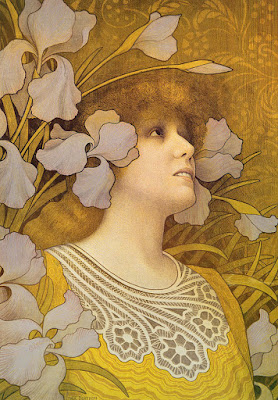
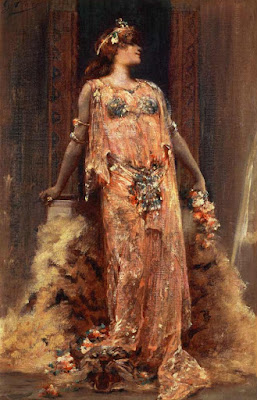
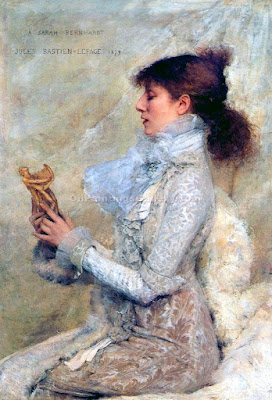
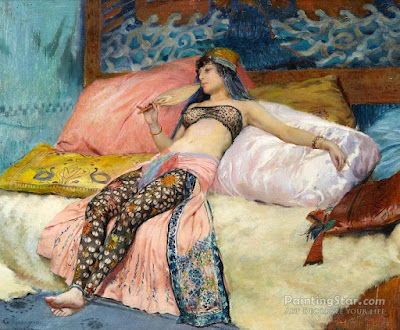
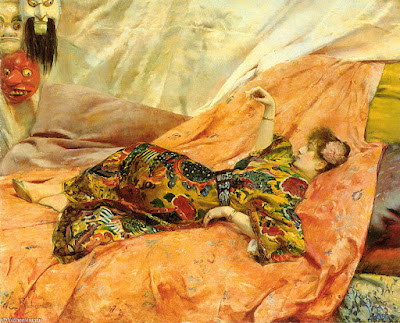 Sarah Bernhardt by Georges Antoine Rochegrosse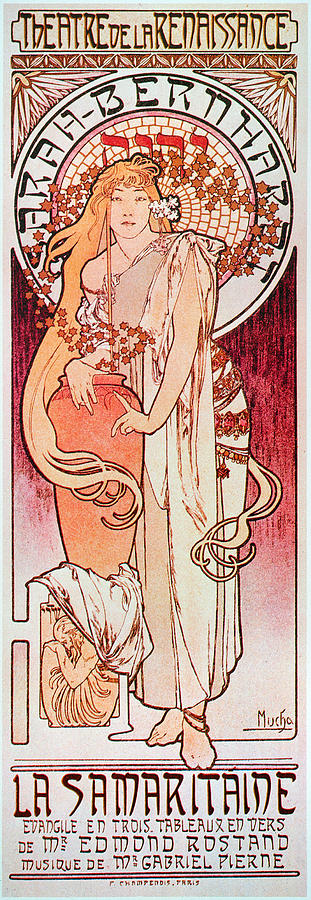
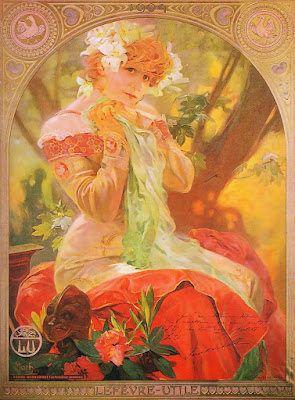


 Book: Sarah Bernhardt: The Art of High Drama (Yale University Press)


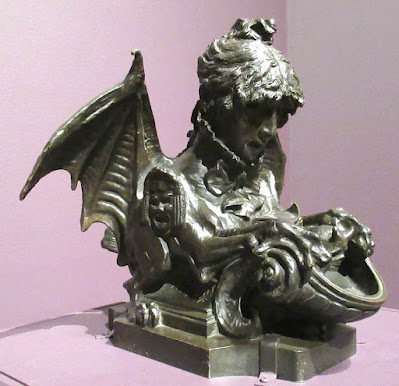


 Emphasizes his posters and decorative work with large color reproductions.
 Oversize, 354 pages, with his photo reference in back, good selection of drawings and Slav Epics.
 Text by Mucha's son Jirí Mucha gives extensive insight into Mucha's life and work.
 Contains many prints, jewelry, drawings, and photos not included in other books.
 , also called Documents Decoratifs, this is a Dover reproduction of Mucha's influential style book.
_-_Robert_de_Montesquiou_(1891).jpg)


