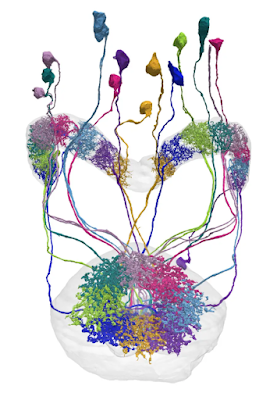
Suppose you made this rough sketch and wanted to finish it in a photo-real or painterly style.


He uploaded the sketch and told the system to render it as "A black and white photo of a young woman, studio lighting, realistic, Ilford HP5 400." The hair style is a little different, and the ear is weird, but the basic pose and lighting is pretty close to the sketch.
Tom says: "Overall, composition is controlled by the sketch and the details are controlled by the prompt.

It looks like a painting, but not much like Rockwell—more like a Victorian artist like Charles S. Lidderdale. On close scrutiny it doesn't hold up too well: the blue ribbon and the costume don't make sense, and her left eye has too many eyelashes.

Here's the sketch rendered in the style of Gustav Klimt. It's got a lot of drawing problems that Klimt never would have allowed, but it is somewhat reminiscent of his style.

And here's the sketch as painted by Vincent Van Gogh. Again, we can pick it apart, but it's in the ballpark.

.
And finally Alfonse Mucha. He is one of the hardest to emulate. It used soft internal transitions and clear outline.
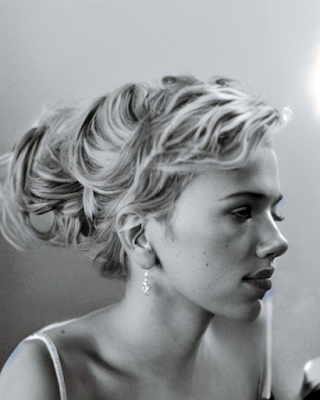
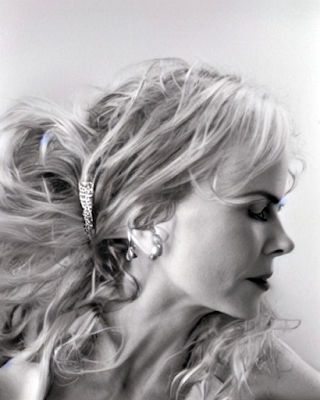
The system was also able to translate the sketch into the features of famous celebrities:
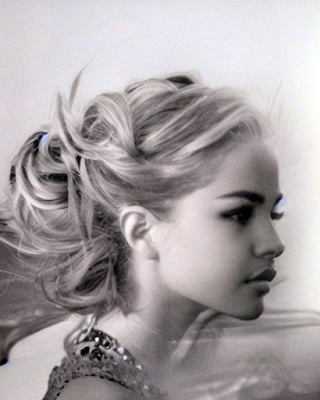
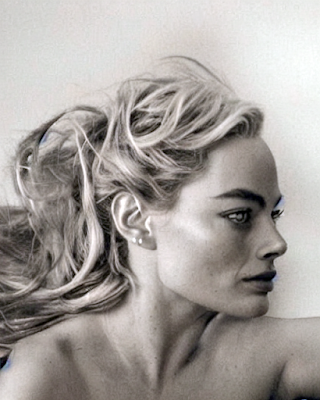

Selena Gomez

Scarlett Johansson

Nicole Kidman

Emma Stone
All of them have big problems with the hair, but they're recognizable, and let's admit the tech is in its infancy and will only get better.
If you're an artist, you might find all this a little scary, threatening, or astounding. I do too! I feel like we've been introduced to a magical genie who can bring whatever we wish into existence.
Some have responded by calling for laws to ban the technology from creating images in the styles of living, working artists. What if someone created a print for sale that was supposedly painted by you or me?
I think we have to be careful how we respond to this apparent threat. Let's keep in mind that the technology is transformative, meaning it doesn't copy/paste images. It creates something new. And artistic styles can't be—and shouldn't be—copyrightable. These tools are here to stay. They're only going to get more advanced, and they're open-source. Also the people who are developing it are artists, too.
I'm wary of laws or AI bots that restrict the growth of this new art form, or that drive the prompts underground. Instead of involving politicians and lawyers and AI bots, we should encourage a culture of mutual respect and fair play. Perhaps we should encourage generative artists to share their prompts when they use a living artist's name, and never to mislead their audience into thinking the work was actually painted by that artist. Basically, people should give credit where credit is due.
How do you think we should regulate or guide this new art industry?